
Do Flight Prices Get Cheaper Closer to the Date? Last-Minute Booking Truths
 Dec, 18 2025
Flight Booking Time Calculator
Flight Booking Time Calculator
You’ve got a free weekend. The kids are off school. Your partner just said, "Let’s get away." But you haven’t booked a thing. And now you’re wondering: do flight prices get cheaper closer to the date? The answer isn’t simple. It’s not a yes or no. It’s a gamble with your wallet.
Flight prices don’t drop because airlines feel sorry for you
Airlines aren’t charities. They don’t lower prices because you forgot to plan. They lower prices because seats are still empty and they need to fill them. That’s it. And that only happens if demand is low. If you’re flying to a popular destination like Cancún, Barcelona, or Orlando in December, prices won’t drop. They’ll go up. By the time you’re searching on a Tuesday night, most of the cheap seats are already gone.Here’s what actually happens: airlines use dynamic pricing. They start with a set number of low-fare seats-usually 10-20% of total capacity. These go fast. If those seats sell out, the next batch of seats costs more. And the next. By 30 days out, you’re looking at full fare. By 7 days out? You’re paying premium.
When prices *might* drop (and when they won’t)
There are exceptions. But they’re rare and hard to predict.Flights to less popular destinations-think Riga, Tbilisi, or even Belfast in January-sometimes get cheaper in the final week. Why? Fewer people want to go. Airlines have more empty seats. They might slash prices 48-72 hours before departure to avoid flying with half-empty planes.
But here’s the catch: you can’t count on it. And if you wait too long, you might not even find a seat. In 2024, over 12% of last-minute travelers (booked within 7 days) couldn’t find a flight to their chosen destination at all, according to data from the International Air Transport Association.
Meanwhile, flights during holidays, school breaks, or major events? Prices spike. Christmas week? New Year’s Eve? A music festival in Ibiza? Don’t wait. Prices will be at their highest. And you’ll pay more for the same flight than someone who booked three months ago.
What really drives flight prices
It’s not just time. It’s demand, competition, and fuel. Here’s what actually moves the needle:- Demand spikes: If 10,000 people search for flights to Prague on the same day, prices jump. Airlines see that and raise rates.
- Competition: If two airlines fly the same route, prices stay lower. If only one airline flies it? You’re stuck paying more.
- Fuel costs: A 5% jump in jet fuel can add $30-$80 to a ticket. Airlines adjust prices within hours.
- Day of the week: Tuesdays and Wednesdays are usually cheapest. Fridays and Sundays? Most expensive.
- Time of day: Red-eye flights and early morning departures often cost less. People don’t like them. So airlines discount them.
So if you’re thinking, "I’ll wait till Thursday night," you’re not saving money-you’re risking a $200 surprise.
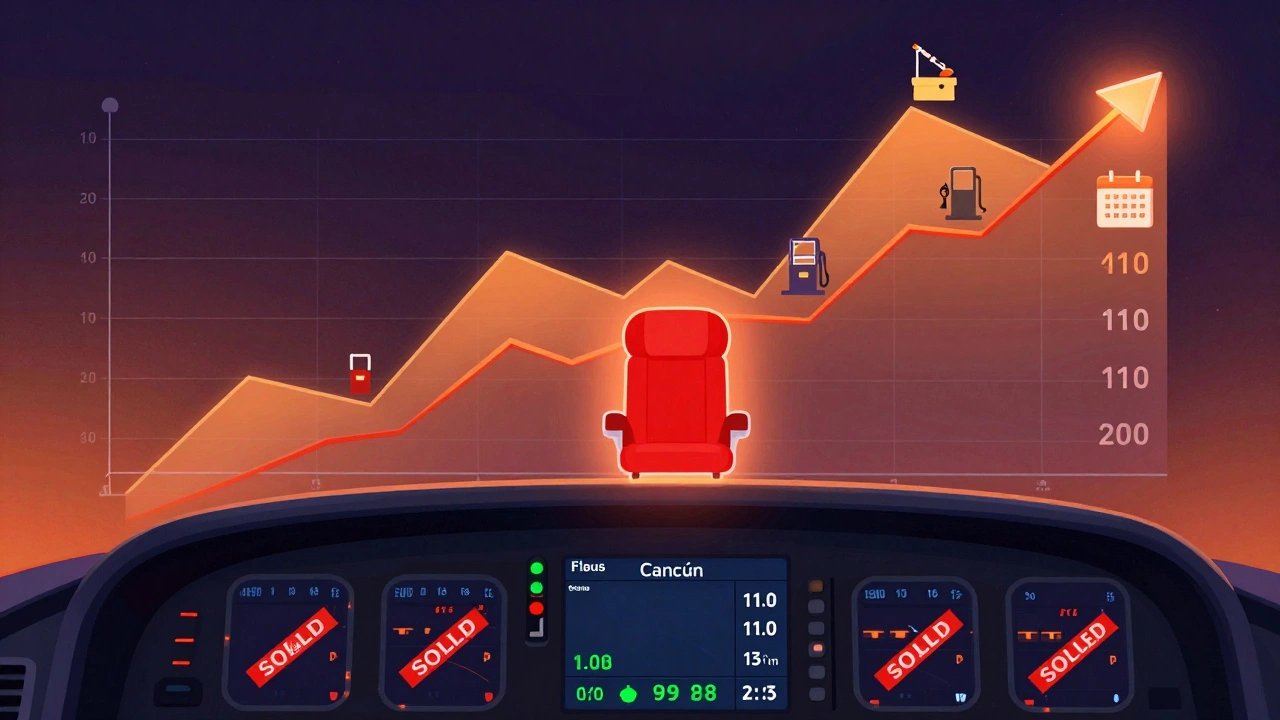
The 11-54 day sweet spot
If you want the best shot at a low price, book between 11 and 54 days before departure. That’s the sweet spot for most routes, especially in Europe and North America.Why? That’s when airlines have enough data to know how many people are likely to book. They’ve sold most of their discount seats, but haven’t yet raised prices to full fare. This window gives you the best mix of availability and price.
For international trips, aim for the 54-day mark. For short-haul European flights? 11-30 days out is often enough. A 2023 study by Hopper analyzed over 1 billion flight searches and found that booking 32 days in advance saved travelers an average of $150 compared to booking within 7 days.
What to do if you’re stuck with a last-minute trip
You didn’t plan. You’ve got 72 hours. What now?- Check alternate airports. Flying into London Stansted instead of Heathrow? Or Milan Bergamo instead of Malpensa? You could save $100-$300.
- Try different dates. Leaving on a Wednesday instead of Friday? You might cut the price in half.
- Use incognito mode. It won’t magically lower prices, but it stops airlines from tracking your searches and nudging prices up.
- Set price alerts. Google Flights, Hopper, and Skyscanner let you track specific routes. If a drop happens, you’ll know.
- Consider trains or buses. For trips under 5 hours, a train can be cheaper, more comfortable, and less stressful than a last-minute flight.
And if you’re still stuck? Book the flight. Even if it’s expensive. A $400 flight to Lisbon is better than no trip at all. You can always save on accommodation. Book a hostel. Stay in an Airbnb outside the city center. Skip the fancy dinner. The flight is the fixed cost. Everything else is flexible.

Myth: Booking last minute = hidden deals
You’ve seen the ads: "Last-minute deals! Only $99!" Those aren’t hidden gems. They’re often:- Flights with 3+ layovers
- Departing at 4 a.m. from a remote airport
- Non-refundable with no baggage allowance
- On airlines you’ve never heard of
Those aren’t deals. They’re compromises. And if you’re traveling with kids, luggage, or just want to arrive without a headache, they’re not worth it.
Real last-minute deals happen when airlines need to fill seats. But they don’t advertise them on Instagram. They push them to loyalty members or sell them through obscure travel agents. If you’re not already signed up for airline newsletters or have elite status, you won’t see them.
Bottom line: Don’t gamble with your trip
Waiting for prices to drop is like waiting for rain in a drought. Sometimes it happens. Usually, it doesn’t. And when it doesn’t, you’re stuck paying more, flying on a packed plane, and missing out on the best hotel rates.If you want to save money on flights, plan ahead. Even a little. Book 6 weeks out. Pick a mid-week departure. Avoid holidays. Use price alerts. Compare airports. That’s how you get real savings-not by hoping.
But if you’re the type who thrives on spontaneity? Go for it. Just know the risk. And if you end up paying $500 for a flight that someone else booked for $220? At least you got to go.
When to book based on your trip type
- Domestic U.S. or EU flights: 11-54 days out
- International flights: 54-120 days out
- Peak season (Christmas, summer holidays): Book 4-6 months ahead
- Weekend getaway: 14-30 days out is usually enough
- Last-minute (within 7 days): Only if you’re flexible, willing to fly early, and okay with extra fees
There’s no magic date. But there’s a pattern. And it’s not waiting until the last minute.