
Does All-Inclusive Mean All You Can Eat and Drink?
 Dec, 14 2025
All-Inclusive Resort Coverage Estimator
Estimate Your Resort Costs
Select your preferences to see what's typically included and potential extra costs.
Estimated Extra Costs
What's Typically Included
When you book an all-inclusive holiday, you’re promised simplicity: pay once, and everything’s covered. But here’s the thing most people don’t tell you - all-inclusive doesn’t always mean all you can eat and drink. Not even close. Some resorts serve you three meals a day with a few snacks and basic drinks. Others let you snack all day, sip premium cocktails by the pool, and order room service at 2 a.m. It all depends on the resort, the price, and the fine print.
What ‘All-Inclusive’ Actually Covers
The term ‘all-inclusive’ is a marketing label, not a legal standard. There’s no global rule saying what must be included. In the Caribbean, a $500-per-night resort might offer buffet breakfast, lunch, and dinner, plus local beer, house wine, and soft drinks. But that same resort might charge extra for lobster, sushi, or imported whiskey. Meanwhile, a $1,200-per-night resort in Mexico might include 24/7 room service, premium spirits, and à la carte dining at five different restaurants - no extra fees.
Think of it like a gym membership. Some gyms give you a treadmill and free weights. Others give you yoga classes, personal trainers, saunas, and smoothie bars. Same word - totally different experience.
Food: Buffet or Fine Dining?
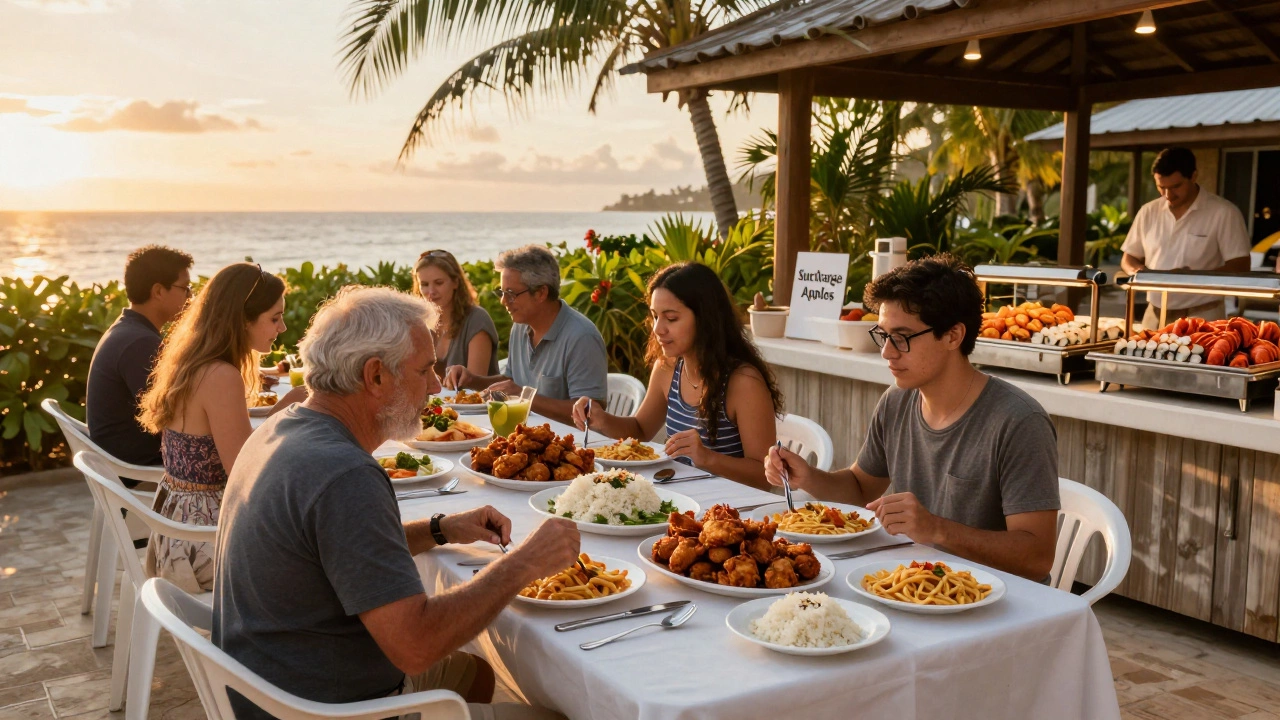
Most all-inclusive resorts serve food in large buffets. That’s the default. You show up, fill your plate, and go. But not all buffets are created equal. At lower-tier resorts, you might get the same pasta, fried chicken, and rice every night. At higher-end ones, you’ll find rotating themes: Italian night with handmade pasta, Mexican street food stalls, fresh seafood grills, or even chef’s tasting menus.
Some resorts include one or two à la carte restaurants in the package. Others charge $25-$50 per person just to sit down at a steakhouse or sushi bar. You’ll often see signs like ‘Reservation Required’ or ‘Surcharge Applies’ - and if you don’t read them, you’ll be surprised at checkout.
Snacks? Sometimes yes, sometimes no. Some places offer snacks between meals - think sandwiches, fruit, ice cream. Others only give you snacks if you ask for them at the bar. If you’re the kind who gets hungry between meals, ask upfront: ‘Is there a snack menu included?’
Drinks: Local or Premium?
Drinks are where the biggest confusion happens. ‘All you can drink’ sounds unlimited - but it’s rarely true.
At budget all-inclusives, you’ll get local beer (like Corona in Mexico, Red Stripe in Jamaica), house wine (usually red or white, nothing fancy), and soft drinks. Premium brands - Grey Goose, Jack Daniel’s, Moët - cost extra. Same goes for specialty coffee, fresh juice, or bottled water. Yes, bottled water. You might think it’s included, but at some resorts, you pay $3 for a small bottle unless you stick to tap water (which isn’t always safe to drink).
Higher-end resorts often include premium drinks. But even then, there are limits. You won’t find unlimited champagne at brunch unless it’s a special package. Some resorts cap the number of drinks per hour. Others don’t serve alcohol after midnight. And if you order a cocktail with imported rum, you might get a $10 surcharge.
Pro tip: Look for resorts that say ‘premium all-inclusive’ or ‘ultra all-inclusive.’ Those usually mean top-shelf liquor, branded cocktails, and no hidden fees. But they also cost 30-50% more.

What’s Usually Not Included
Even at the fanciest all-inclusive resorts, some things are always extra:
- Spa treatments - massages, facials, saunas
- Scuba diving, snorkeling tours, or water sports rentals
- Off-site excursions - like zip-lining or visiting ancient ruins
- Laundry service
- Specialty coffee drinks - like lattes or cold brew
- Room service after 10 p.m. - some resorts charge for it
- Shopping - souvenirs, sunscreen, sunglasses
And don’t assume kids eat free. Some resorts charge for children’s meals after age 12. Others give kids a separate kids’ menu with limited options. Always check the age policy.
How to Know What You’re Really Getting
Don’t trust the word ‘all-inclusive’ on a website. Look for the details.
- Check the resort’s official website - not third-party booking sites. They list exactly what’s included.
- Look for terms like ‘premium all-inclusive,’ ‘ultra all-inclusive,’ or ‘select dining.’ These mean more.
- Read recent guest reviews. People always complain about hidden charges.
- Call the resort and ask: ‘Is everything I eat and drink included? Even premium drinks and room service?’
- Ask about meal times. Some resorts only serve dinner between 6 and 9 p.m. - no late-night snacks.
One traveler in Cancún booked what she thought was a full all-inclusive. She spent $120 extra in one night just on bottled water and a grilled fish dinner. She didn’t realize the ‘all-inclusive’ only covered the main buffet and local beer.

Who Should Book All-Inclusive?
All-inclusive works best for people who:
- Want to avoid tracking every expense
- Don’t mind eating buffet-style most meals
- Are okay with local drinks and don’t need premium brands
- Plan to spend most of their time at the resort
It’s not ideal if you:
- Love fine dining and want to try local restaurants
- Drink craft beer, wine, or imported spirits regularly
- Need flexibility with meal times
- Plan to explore outside the resort often
Some people book all-inclusive to save money. But if you’re a heavy drinker or a foodie, you might end up spending more than if you booked a hotel and ate out. It’s not always cheaper - it’s just simpler.
Bottom Line: Read the Fine Print
‘All-inclusive’ is a promise - but it’s not a guarantee. The only way to know what you’re getting is to dig into the details. Don’t assume. Don’t guess. Ask. Read. Confirm.
There’s no universal rule. What’s included at one resort might cost extra at the next. The difference between a $300 and a $900 all-inclusive isn’t just the room - it’s the food, the drinks, the freedom. And if you want to eat and drink without limits, you usually have to pay for it.