
G Adventures and National Geographic: The Partnership Explained
 Aug, 3 2026
G Adventures vs. National Geographic Explorer
Use this tool to clarify the relationship between these two major travel entities and decide which experience fits your style.
| Feature | G Adventures | National Geographic |
|---|---|---|
| Primary Business | Tour Operator / Logistics | Media / Education / Research |
| Founded | 1990 | 1888 |
| Headquarters | Vancouver, Canada | Washington, D.C., USA |
| Core Strength | On-the-ground execution, local guides, safety protocols | Brand trust, scientific expertise, storytelling, conservation |
| Ownership | Privately held (founder Bruce Poon Tip) | Non-profit society |
| Role in Partnership | Provides the "Muscle": Buses, hotels, visas, emergency support. | Provides the "Soul": Brand prestige, expert leaders, exclusive access. |
What matters most for your next trip?
Select the options that describe your ideal travel experience.
Have you ever scrolled through a travel booking site and seen the iconic yellow rectangle of National Geographic is a non-profit organization known for its scientific research, photography, and educational content about geography, history, and culture sitting right next to the logo of G Adventures is a Canadian-based tour operator specializing in small-group adventure travel across more than 100 countries? It’s easy to assume they are the same company, or perhaps that one bought the other. The reality is much more interesting. They are two distinct entities with very different origins, but they have joined forces in a way that has reshaped the adventure travel industry.
If you are planning an adventure holiday, understanding this relationship matters. It affects everything from who leads your trip to what kind of experiences you can expect. Let’s clear up the confusion once and for all.
The Short Answer: A Strategic Partnership
To answer the question directly: No, G Adventures is not owned by National Geographic, nor is National Geographic owned by G Adventures. Instead, they share a long-standing strategic partnership. Think of it like a celebrity chef partnering with a restaurant chain. The chef brings the brand prestige, the expertise, and the unique recipes (in this case, expert guides and curated itineraries), while the restaurant handles the logistics, bookings, and operations.
This collaboration began in earnest around 2013 when National Geographic started licensing its name and brand to select travel partners. G Adventures was one of the first major operators to sign on. This allowed travelers to book trips under the banner of "National Geographic Expeditions" while actually being led by G Adventures’ infrastructure and staff. For years, these trips were marketed as a premium tier within G Adventures, offering smaller groups, higher-end accommodations, and access to exclusive locations.
Who Is Who? Understanding the Brands
To really grasp why this partnership works, we need to look at what each company does best. They come from completely different worlds.
| Feature | G Adventures | National Geographic |
|---|---|---|
| Primary Business | Tour Operator / Logistics | Media / Education / Research |
| Founded | 1990 | 1888 |
| Headquarters | Vancouver, Canada | Washington, D.C., USA |
| Core Strength | On-the-ground execution, local guides, safety protocols | Brand trust, scientific expertise, storytelling, conservation |
| Ownership | Privately held (founder Bruce Poon Tip) | Non-profit society |
G Adventures is a pure-play travel company. Founded by Bruce Poon Tip in 1990, its entire business model revolves around taking people off the beaten path safely and responsibly. They handle the buses, the hotels, the visas, and the emergency support. Their strength is operational excellence. When you book with them, you know exactly how the logistics will work because they’ve done it thousands of times before.
National Geographic, on the other hand, is over 130 years old. It is a non-profit society dedicated to exploring and protecting our planet. Its strength lies in its brand equity. That yellow border represents trust, discovery, and high-quality journalism. When NatGeo puts its name on something, consumers expect authenticity and depth. However, NatGeo does not operate tour buses or manage hotel reservations. That is where G Adventures comes in.
How the Collaboration Worked in Practice
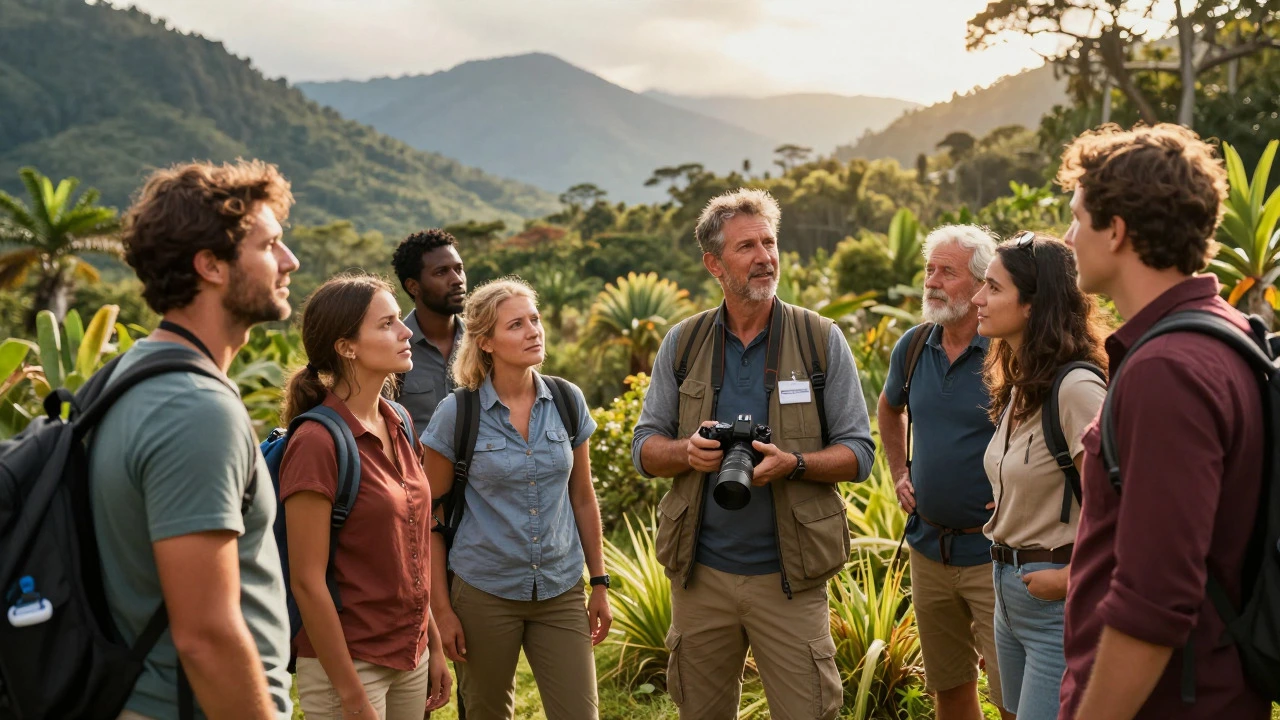
For the past decade, if you booked a "National Geographic Expedition" through G Adventures, you weren’t just getting a standard backpacking trip. You were getting a hybrid experience. Here is what that looked like on the ground:
- Expert Leaders: Instead of a standard tour leader, many of these trips featured a "National Geographic Expert Leader." These were often former photographers, journalists, scientists, or historians affiliated with the magazine. Imagine hiking the Inca Trail with someone who has photographed Machu Picchu for NatGeo, rather than just a guide reading from a script.
- Smaller Groups: While standard G Adventures trips might cap out at 12-16 people, the NatGeo-branded trips were often limited to even smaller numbers, sometimes just 8-10, to allow for more intimate interaction with the expert.
- Exclusive Access: The partnership opened doors that regular tourists couldn’t walk through. Travelers might get behind-the-scenes access to archaeological digs, private viewings in museums, or meetings with conservationists working on the front lines.
- Higher-End Accommodations: G Adventures is known for hostels and budget guesthouses. The NatGeo tier shifted this toward boutique hotels and lodges, appealing to travelers who wanted adventure without sacrificing comfort.
This model worked well because it leveraged the strengths of both parties. G Adventures provided the muscle; National Geographic provided the soul.
The Shift in 2025 and Beyond
However, the landscape changed significantly in recent years. In late 2024 and early 2025, there was a noticeable shift in how these brands interacted. National Geographic decided to streamline its travel offerings. Rather than relying solely on G Adventures, NatGeo expanded its partnerships to include other major operators like Intrepid Travel and Abercrombie & Kent. More importantly, they began pushing their own direct-to-consumer digital experiences and shorter, more focused expedition series.
For G Adventures, this meant a rebranding of their premium tier. Many of the explicitly "National Geographic" branded itineraries were either retired or merged into G Adventures’ own "Expeditionary Journeys" line. If you are looking at their website today in 2026, you might see fewer logos with the yellow border. The core value proposition-the expert leaders and exclusive access-remains, but the branding is less prominent. This is a crucial detail for anyone searching for these specific trips. You still get the quality, but the marketing angle has evolved.
Does the Partnership Still Matter to You?
If you are trying to decide whether to book a trip based on this connection, here is what you should keep in mind. The "National Geographic" label used to be a guarantee of a certain type of intellectual depth. Today, that depth is still available, but you have to look closer.
When browsing G Adventures’ current catalog, look for keywords like "Expert-Led," "Cultural Immersion," or "Conservation Focus." These are the spiritual successors to the NatGeo expeditions. The guides are still vetted for their knowledge, and the itineraries still prioritize authentic cultural exchange over sightseeing. The operational backbone is still G Adventures, which means you retain the safety net and community feel that millions of travelers rely on.
Conversely, if you are drawn specifically to the National Geographic brand, you now have more options. You can find NatGeo-branded tours through other operators. Comparing these options is wise. Intrepid, for example, also offers NatGeo expeditions with a strong focus on sustainability. Abercrombie & Kent offers luxury-focused NatGeo trips. Your choice depends on whether you prefer the backpacker-friendly vibe of G Adventures or the luxury polish of Abercrombie.

Why This Distinction Protects Your Travel Budget
Understanding that these are separate companies helps you avoid paying for a brand name you don’t necessarily need. If you love the idea of meeting a wildlife biologist in Costa Rica, you want the expert leader. Whether that leader is endorsed by NatGeo or simply hired by G Adventures for their credentials matters less than their actual bio. Check the guide’s profile. Read their background. If they have published research or photos, you are getting the value regardless of the logo on the brochure.
Additionally, G Adventures is known for its "Planeterra Foundation," which supports local communities. This social impact mission aligns closely with National Geographic’s conservation goals. Even without the explicit co-branding, G Adventures continues to invest heavily in community-led tourism. So, the ethical alignment remains intact.
Common Misconceptions Clarified
I often hear travelers ask if they can use their National Geographic membership for discounts on G Adventures trips. The short answer is usually no. While some credit card partnerships or specific promotions might offer perks, there is no universal discount code linking the two organizations. Another common myth is that National Geographic vets every single G Adventure trip. They do not. They only vet the specific itineraries they license. A standard G Adventures bus tour through Europe is entirely independent of NatGeo’s editorial team.
It is also worth noting that National Geographic’s primary revenue comes from subscriptions, licensing, and grants, not tour sales. Their involvement in travel is a brand extension, not their core business. G Adventures, meanwhile, lives and dies by customer reviews and repeat bookings. This difference in motivation means G Adventures is hyper-focused on service delivery, while NatGeo is focused on storytelling and education.
Making the Right Choice for Your Next Trip
So, how do you proceed? If you are looking for a rugged, social, and highly organized adventure, G Adventures remains a top-tier choice. Their network of local partners ensures that your money stays in the communities you visit. If you are specifically seeking the academic rigor and photographic perspective associated with the yellow rectangle, look for the "Expert-Led" tag on their site, or explore their competitors who still carry heavy NatGeo branding.
The relationship between G Adventures and National Geographic is a case study in successful brand synergy. They proved that a media giant and a logistics company could create something greater than the sum of its parts. Even as the branding evolves, the lesson remains: look beyond the logo. Focus on the itinerary, the guide’s expertise, and the company’s commitment to sustainable travel. That is where the real value lies.
Is G Adventures owned by National Geographic?
No, G Adventures is not owned by National Geographic. G Adventures is a privately held company founded by Bruce Poon Tip. National Geographic is a non-profit society. They have a strategic partnership where G Adventures operates tours under the National Geographic brand, but they remain legally and operationally separate entities.
Are National Geographic Expeditions still available through G Adventures?
As of 2026, the explicit "National Geographic Expeditions" branding has been scaled back on G Adventures' platform. Many of these trips have been integrated into G Adventures' own "Expeditionary Journeys" line. While you may find fewer logos with the yellow border, the core elements-expert leaders and exclusive access-remain available under G Adventures' own premium tiers. It is best to check the specific itinerary details for "Expert-Led" tags.
What is the difference between a standard G Adventures trip and a NatGeo-branded trip?
Historically, NatGeo-branded trips offered smaller group sizes, higher-end accommodations, and were led by National Geographic Expert Leaders (such as photographers or scientists). Standard G Adventures trips typically feature larger groups, budget-to-mid-range lodging, and professional tour leaders focused on logistics and fun. Today, G Adventures offers similar premium features through its own "Expeditionary Journeys" category.
Do I get a discount on G Adventures if I have a National Geographic membership?
Generally, no. There is no automatic discount for having a National Geographic magazine subscription or membership when booking with G Adventures. Occasionally, there may be promotional partnerships with credit cards or specific campaigns, but these are not standard policy. Always check the current promotions page on G Adventures' website for any active deals.
Which other tour operators partner with National Geographic?
National Geographic has partnered with several major tour operators besides G Adventures. These include Intrepid Travel, Abercrombie & Kent, and Scenic Tours. Each operator brings its own style to the partnership. Intrepid focuses on sustainability and small groups, while Abercrombie & Kent offers luxury-focused expeditions. Comparing these options can help you find the best fit for your travel style.
Is G Adventures a good company for solo travelers?
Yes, G Adventures is highly regarded for solo travelers. They offer a "Solo Supplement" waiver on many trips, meaning you don't have to pay extra for a single room if you travel alone. Their small-group format makes it easy to meet other travelers, and their safety protocols are robust, making them a popular choice for women traveling solo as well.
How does the Planeterra Foundation relate to this partnership?
The Planeterra Foundation is G Adventures' social enterprise arm, dedicated to supporting local communities through tourism. While not directly part of the National Geographic partnership, its mission aligns closely with NatGeo's conservation and cultural preservation goals. Both organizations emphasize responsible travel, ensuring that tourism benefits local economies and protects natural heritage.