
What Exactly Are Adventure Holidays? A Guide to Thrill-Seeking Travel
 Apr, 16 2026
Adventure Type Finder
Not sure which level of adventure is right for you? Answer these four questions to find your match.
Your Match: Soft Adventure
You're looking for active exploration and a bit of a thrill, but you value comfort and safety. You'll enjoy experiences that challenge you without pushing you past your breaking point.
Your Match: Hard Adventure
You are a thrill-seeker who embraces the challenge. You have the skills and fitness to treat the environment as your primary antagonist and seek mastery over difficult skills.
Beyond the Beach Chair
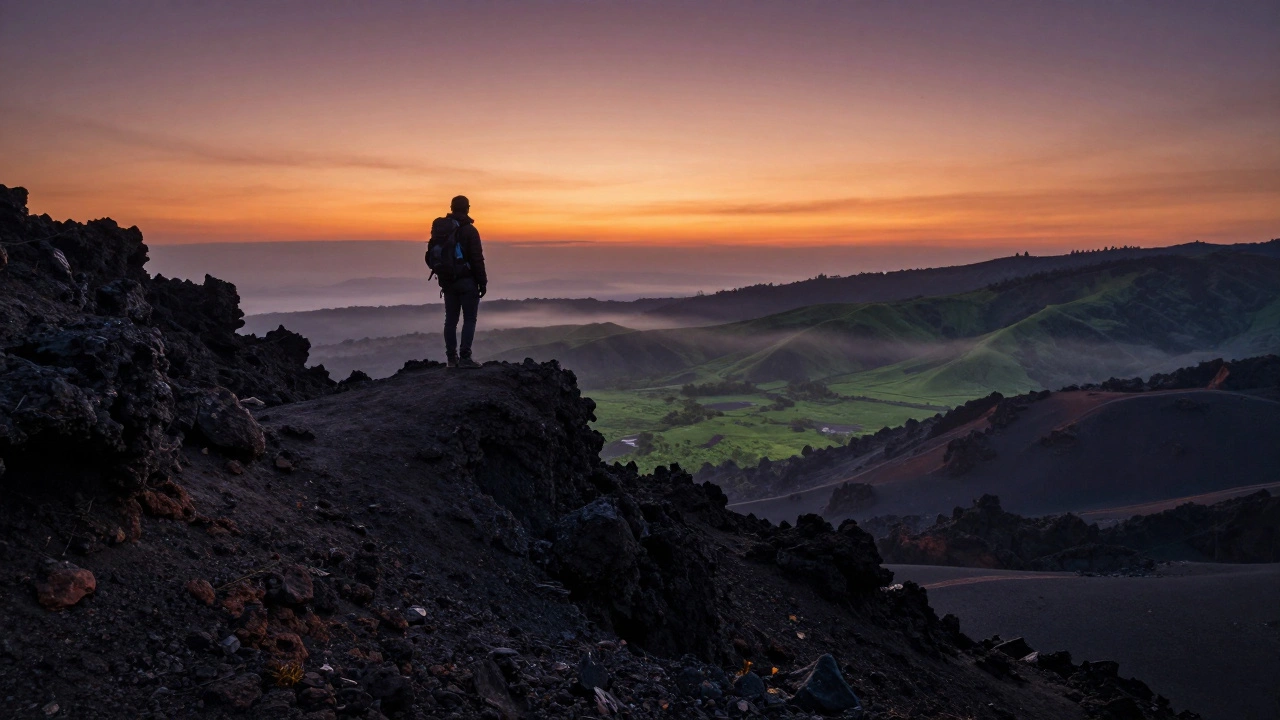
Imagine swapping a poolside cocktail for a sunrise trek across a volcanic ridge or trading a hotel buffet for a campfire meal in the middle of a rainforest. That shift in perspective is exactly what defines an adventure holiday. It isn't just about going to a new place; it's about how you interact with that place. While a standard vacation is designed for relaxation and passive observation, an adventure trip is built around active participation and a willingness to step outside your comfort zone.
For many, the core appeal is the "adrenaline rush," but it's deeper than that. It's about the feeling of accomplishment when you reach a summit or the humility you feel standing at the edge of a glacier. In essence, adventure holidays is a form of travel that involves a combination of physical exertion, cultural immersion, and a degree of risk, typically set in natural or remote environments. It's the difference between seeing a mountain from a bus window and actually climbing it.
The Spectrum of Adventure: Soft vs. Hard
Not every adventure trip requires you to be an elite athlete or a seasoned survivalist. The industry generally splits these experiences into two categories: "soft" and "hard" adventure. Understanding this split helps you pick a trip that challenges you without pushing you past your breaking point.
Soft adventure is designed for the average person. It's accessible, involves a lower level of risk, and usually provides a safety net. Think of a guided kayaking trip through a calm mangrove forest or a walking tour through the highlands of Scotland. You're active and exploring, but you'll likely have a comfortable bed and a hot shower waiting for you at the end of the day.
Hard adventure, on the other hand, is for those seeking a visceral challenge. It requires specialized skills, significant physical fitness, and a higher tolerance for risk. We're talking about high-altitude mountaineering in the Himalayas, white-water rafting through Class V rapids, or multi-day cave explorations. In these scenarios, the environment is the primary antagonist, and the goal is often survival and mastery of a difficult skill.
| Feature | Soft Adventure | Hard Adventure |
|---|---|---|
| Skill Level | Beginner to Intermediate | Expert/Specialized Training |
| Physical Effort | Moderate (Walking, paddling) | High (Climbing, endurance) |
| Risk Level | Low to Medium (Managed) | High (Inherent environmental risks) |
| Accommodations | Hotels, Guesthouses, Glamping | Tents, Bivouacs, Remote huts |
| Example Activity | Zip-lining in Costa Rica | Summiting Aconcagua |
The Psychological Driver: Why We Seek the Thrill
Why would anyone pay money to be exhausted, cold, or scared? It seems counterintuitive to the traditional idea of a "holiday." However, psychology tells us that these experiences trigger a powerful chemical response. When you engage in experiential travel, your brain releases endorphins and dopamine, creating a state of "flow" where you are completely present in the moment.
This is often referred to as the "peak experience." When you're navigating a complex trail or learning to surf in the Pacific Ocean, you aren't thinking about your emails or your mortgage. You're focused entirely on the immediate physical reality. This mental reset is often more refreshing than a week of doing nothing. It's a form of active recovery that rebuilds confidence and resilience.
Common Types of Adventure Activities
Adventure isn't a one-size-fits-all label. Depending on your interests, you can categorize these holidays by the element they focus on:
- Land-Based: This includes trekking, mountain biking, and wildlife safaris. For example, hiking the Inca Trail to Machu Picchu combines physical endurance with historical discovery.
- Water-Based: Think scuba diving in the Great Barrier Reef, surfing in Bali, or canoeing through the Canadian wilderness. These activities often combine the thrill of the sport with the beauty of aquatic ecosystems.
- Air-Based: Paragliding, bungee jumping, and skydiving. These are typically high-intensity, short-duration thrills that provide an unparalleled perspective of the landscape.
- Cultural Adventure: This is less about adrenaline and more about the "adventure of the unknown." It involves visiting remote tribes, learning indigenous survival skills, or navigating a city where you don't speak the language.
Planning Your First Adventure: A Practical Approach
If you're moving from a "sun and sand" vacation to your first adventure trip, jumping straight into the deep end can be overwhelming. The key is to build your "adventure resume" gradually. Start with a guided group tour. Guided Tours provide the necessary infrastructure-gear, transport, and expert knowledge-which removes the anxiety of the unknown.
Consider the gear. You don't need to buy the most expensive equipment immediately, but you do need the right stuff. A pair of poorly fitted boots can turn a dream trek into a nightmare of blisters. Look for gear that is specific to the climate. If you're heading to the Andes, you'll need layering systems to handle the rapid temperature shifts from day to night.
Health and safety are non-negotiable. Check if you need specific vaccinations or if the altitude of your destination requires a medical clearance. Many hard adventure trips also recommend travel insurance that specifically covers "extreme sports," as standard policies often exclude things like scuba diving or mountaineering.
The Ethics of Adventure: Leaving No Trace
As adventure travel grows in popularity, the impact on remote environments increases. This is why the Leave No Trace philosophy is so critical. It's a set of guidelines designed to minimize the human footprint in nature. Whether you're camping in a national park or trekking through a jungle, the goal is to leave the land exactly as you found it.
This means packing out all your trash, staying on designated trails to avoid eroding the soil, and respecting wildlife from a distance. True adventure is about appreciating nature, not dominating it. When we treat the environment as a playground without respect, we destroy the very thing that makes adventure travel valuable.
Evaluating an Adventure Operator
Not all adventure companies are created equal. To avoid "adventure traps"-trips that promise thrills but compromise on safety-you need to ask the right questions. A reputable operator should be able to provide their certification credentials, such as membership in the International Federation of Mountain Guides Associations (IFMGA) for climbing trips.
Ask about their safety protocols. Do they have a satellite phone? What is the ratio of guides to guests? If a company tells you "everything will be fine" without explaining the actual safety plan, that's a red flag. A professional guide doesn't just lead the way; they manage risk constantly, reading the weather and the group's energy levels to make real-time decisions.
The Long-Term Impact of Adventure Travel
The beauty of these trips is that they change you long after you've returned home. There's a specific kind of confidence that comes from surviving a storm in a tent or successfully navigating a foreign city using only a paper map. This is known as "transformative travel." It shifts your identity from someone who "watches" life to someone who "experiences" it.
You'll find that your tolerance for discomfort increases. The small annoyances of daily life-a traffic jam or a slow internet connection-seem trivial when compared to the challenge of a 10-mile hike with a 30-pound pack. In a world that is increasingly digitized and sanitized, adventure holidays provide a necessary friction that reminds us we are physical beings in a physical world.
Do I need to be fit to go on an adventure holiday?
Not necessarily. While "hard adventure" requires high fitness, "soft adventure" is designed for people of all fitness levels. The key is to match the activity to your current ability and gradually increase the challenge. If you're worried, start with a moderate walking tour or a guided kayaking trip before attempting a multi-day trek.
Are adventure holidays safe?
Any activity with physical exertion involves some risk, but professional operators manage this through rigorous safety protocols, certified guides, and proper equipment. The risk is significantly lower when you use reputable companies and follow their instructions. Always ensure your travel insurance covers the specific activities you plan to do.
What is the difference between an adventure holiday and a regular trip?
A regular trip usually focuses on relaxation, sightseeing, and comfort. An adventure holiday focuses on activity, challenge, and immersion in nature or unfamiliar cultures. In a regular trip, you are a spectator; in an adventure holiday, you are a participant.
How do I choose between soft and hard adventure?
Ask yourself how much risk you are comfortable with and what your current skill level is. If you want to explore nature but still want a comfortable bed at night, go for soft adventure. If you have technical skills (like rock climbing or scuba certification) and want to push your physical limits, hard adventure is for you.
What should I pack for my first adventure trip?
Focus on three things: moisture-wicking clothing (avoid cotton), a sturdy pair of broken-in boots, and a versatile layering system. Bring a reusable water bottle and a basic first-aid kit. Most importantly, check the specific gear list provided by your tour operator, as requirements vary wildly between a desert trek and a rainforest expedition.