
What Is a Serendipitous Cultural Tourist?
 Dec, 15 2025
Serendipity Travel Planner
Calculate how much time you're leaving open for serendipitous cultural encounters during your next trip. The more open time you schedule, the greater your chances of meaningful connections.
Your Travel Schedule
Your Serendipity Score
Based on your travel schedule
You have 18 hours of open time (36% of your total travel time). This is ideal for spontaneous encounters with local culture.
Serendipity Tips for Your Trip
Based on your schedule:
- Leave at least 3 hours per day completely open
- Ask locals: "What's something visitors never see?"
- Spend time in local markets - they're the best places for connections
- Learn 5 phrases in the local language - not "Where's the bathroom?" but "Can I sit with you?"
Most people plan their cultural trips with a checklist: visit the Louvre, see the Taj Mahal, walk the Great Wall. They book tickets in advance, schedule guided tours, and stick to the top-rated attractions. But there’s another kind of traveler-one who doesn’t follow the map. They wander into a back alley in Kyoto and stumble upon a 100-year-old tea master brewing matcha in silence. They get lost in a market in Oaxaca and end up sharing tlayudas with a family who invites them to a local altar ceremony. These aren’t accidents. They’re the hallmark of a serendipitous cultural tourist.
What Exactly Is a Serendipitous Cultural Tourist?
A serendipitous cultural tourist is someone who seeks meaning, connection, and surprise in their travel-not just sightseeing. They don’t just want to see a temple. They want to understand why it’s still alive. They don’t just want to taste local food. They want to know who made it, how it’s passed down, and what it means to the community. Their trips are guided by curiosity, not itineraries.
The word ‘serendipity’ comes from an old Persian fairy tale about three princes who kept finding things they weren’t looking for-and made them valuable. That’s the essence. It’s not luck. It’s a mindset. It’s choosing to notice the quiet moments: the elderly woman humming a folk song while washing clothes by the river, the street musician playing a tune no guidebook mentions, the handwritten note in a village guesthouse that says, ‘Come back next moon. We’ll have the harvest feast.’
How Is This Different From Regular Cultural Tourism?
Traditional cultural tourism is transactional. You pay for a ticket, you get a plaque, you take a photo, you move on. A serendipitous cultural tourist doesn’t want the plaque. They want the story behind it. They might skip the crowded Vatican lines to sit in a tiny chapel in Rome where only three locals come every evening to pray. They’ll ask the shopkeeper in Marrakech how his grandfather learned to weave carpets-and end up spending the afternoon learning the patterns.
One traveler in Hanoi told me she spent three days trying to find the exact street where her great-grandmother was born. She didn’t have an address. Just a name and a faded photo. She asked strangers. She showed the photo to taxi drivers, market vendors, temple guards. On the fourth day, an 82-year-old woman recognized the house in the picture. She invited her in for tea. That woman had been a child when the traveler’s ancestor lived there. They cried. They shared recipes. No tour company could have arranged that.
Why Serendipity Matters in Cultural Travel
Culture isn’t frozen in museums. It’s alive in daily rituals, in the way people speak to each other, in the food they cook for their children, in the songs they sing at funerals. When you chase only the famous sites, you see the surface. Serendipity lets you touch the heartbeat.
A 2023 study by the International Journal of Tourism Anthropology found that travelers who reported ‘unplanned meaningful encounters’ during cultural trips were 68% more likely to say their experience changed how they saw the world. These weren’t just happy memories. They were identity shifts. People came back not just with souvenirs, but with new ways of thinking about family, time, and belonging.
Think about it: how many times have you watched a documentary about a remote village and thought, ‘I wish I could have been there’? A serendipitous cultural tourist doesn’t wish-they show up. And they leave space for the unexpected.

How to Become One
It’s not about being reckless. It’s about being open. Here’s how to start:
- Leave room in your schedule. Don’t pack your days. Block out at least two half-days per week with zero plans. Let yourself wander.
- Ask open questions. Instead of ‘Where’s the best temple?’ ask ‘What’s something here that most visitors never see?’ or ‘Who taught you this tradition?’
- Travel slowly. Stay in one place longer. A week in a small town gives you more cultural access than three days in three cities.
- Use local apps, not tourist ones. Download apps like ‘Nextdoor’ or local Facebook groups for the city you’re visiting. People post about street fairs, family gatherings, hidden shrines.
- Learn five phrases in the local language. Not ‘Where is the bathroom.’ Learn ‘Thank you for sharing this with me.’ ‘Can I sit with you?’ ‘What does this mean?’
- Carry something to give. A book in your language, a seed packet from home, a small handmade item. Not as a bribe. As a gesture. It opens doors.
What You’ll Find When You Stop Looking
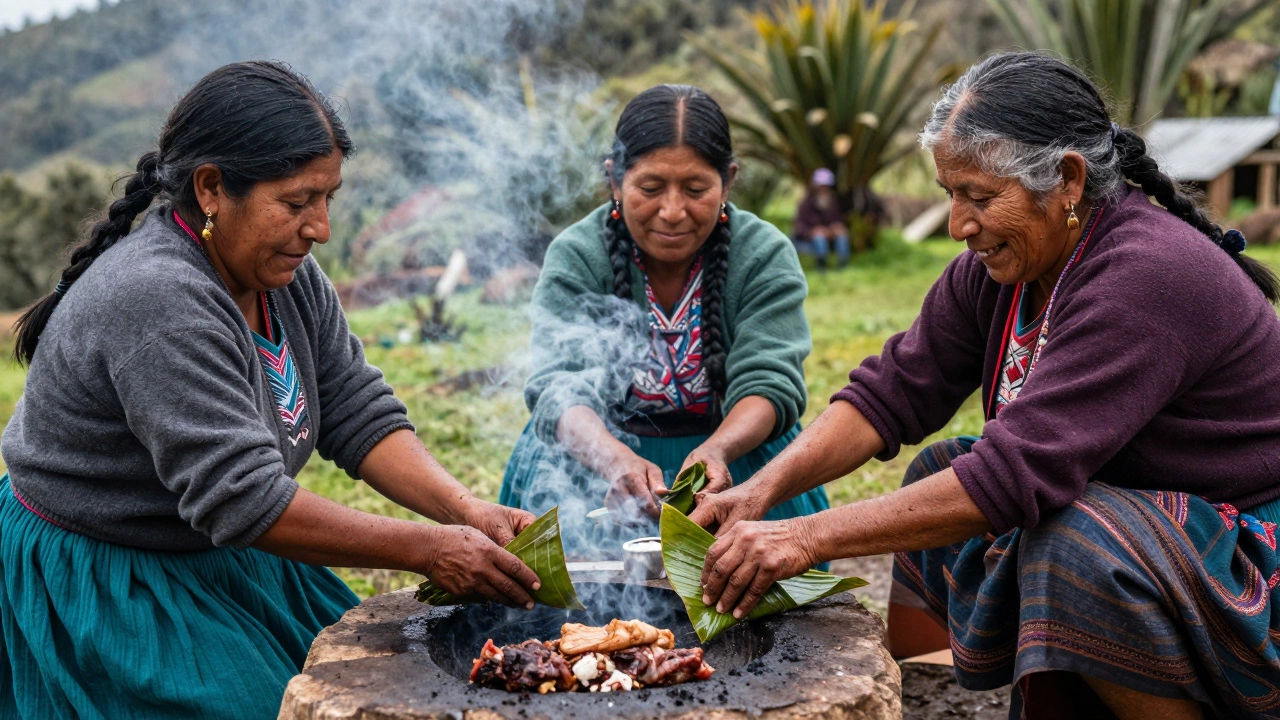
On a rainy afternoon in the highlands of Peru, a traveler followed the smell of roasting corn. She ended up in a kitchen where three generations of women were preparing pachamanca-a dish cooked underground with hot stones. No one spoke English. No one asked for money. They gestured for her to sit. They fed her. They showed her how to wrap the meat in leaves. Later, they sang a song her grandmother had sung too, in a dialect she didn’t know existed.
That’s the magic. You don’t find culture in brochures. You find it in the spaces between the lines. In the silence after someone says, ‘You remind me of my daughter.’ In the way a child offers you a flower because you smiled at them.
There’s no app for this. No Instagram hashtag. No tour guide who can script it. It happens when you stop being a visitor and become a guest.
Common Misconceptions
Some think serendipitous travel means being irresponsible. That you shouldn’t book anything. That’s not true. You still need a place to sleep. You still need to know how to get there. But you don’t need to know what you’ll do when you arrive.
Others think it’s only for solo travelers. Not true. Families do it. Couples do it. Groups of friends do it. One couple from Toronto spent six weeks in Vietnam just following the scent of fresh pho. They didn’t know where it would lead. They ended up helping a grandmother run her noodle stall for three days because her grandson was sick. They learned how to make broth from scratch. They still talk about it.
And no, you don’t need to be ‘spiritual’ or ‘deep.’ You just need to be willing to be surprised.
Real Consequences
When you travel this way, you don’t just change your perspective-you change the places you visit. Local artisans get more work because you bought directly from them. Small family-run homestays stay open because you stayed three nights instead of one. Communities start sharing their traditions because they know someone cares enough to listen.
One village in Georgia started a monthly ‘Story Night’ after a group of serendipitous travelers asked for folk tales. Now tourists come from all over to sit by the fire and hear stories in the old dialect. The village didn’t plan it. They just said yes when someone asked.
Final Thought
The world is full of quiet wonders. The ones no one posts about. The ones you can’t book. The ones you have to be still enough to notice.
Being a serendipitous cultural tourist isn’t about being exotic. It’s about being human. It’s about showing up, listening, and letting the place change you-not just the other way around.
Can you be a serendipitous cultural tourist on a guided tour?
Yes, but only if you choose the right kind. Look for small-group tours led by locals who focus on community connections, not just landmarks. Ask if the guide will take you to their family’s home or a local ritual. If the answer is ‘no,’ you’re still in transactional tourism. True serendipity needs space to breathe.
Is serendipitous travel safe?
Safety isn’t about avoiding risk-it’s about managing it. Trust your instincts. Avoid places that feel off. But don’t let fear stop you from asking questions. Most people want to help. Carry a local SIM card. Share your location with someone back home. Learn basic phrases like ‘I need help’ and ‘Thank you.’ These are your tools.
Do you need to speak the local language?
No, but you need to be willing to try. A smile, a nod, a hand gesture-these speak louder than perfect grammar. People appreciate effort more than fluency. Use translation apps for complex questions, but rely on body language and presence for connection. The moment you laugh at your own mistake, you’ve already broken the ice.
Is this type of travel expensive?
Often, it’s cheaper. Serendipitous travelers stay in homestays, eat at street stalls, and use local transport. They skip expensive museums and pay for experiences instead-like a cooking class with a grandmother or a boat ride with a fisherman. The cost isn’t in dollars. It’s in time, patience, and openness.
What if I don’t find anything special?
You always do. Sometimes it’s just a quiet moment-watching the sunset over a canal with no one else around. Or the way a shopkeeper remembers your name the next day. Serendipity isn’t about grand events. It’s about noticing the small things that feel true. If you’re present, you’ll find them.