
What is the cheapest day to fly? Airfare Pricing Secrets
 Nov, 9 2026
Flight Savings Estimator
Enter your estimated flight details to see how much you could save by shifting your departure day or adjusting your booking time.
Original Price:
New Estimated Price:
Savings from Day Shift:
Savings from Timing:
You’re staring at a flight search engine, heart sinking as you watch the price jump from $450 to $620 in real-time. You refresh the page, hoping for a glitch, but the number stays stubbornly high. It feels like airlines are reading your mind, targeting your wallet with surgical precision. But here’s the truth: it’s rarely magic or malice. It’s math. Specifically, it’s airline revenue management, a complex algorithmic system that adjusts ticket prices based on demand, time of booking, and seat availability.
The old advice-"book on Tuesday"-is mostly a myth now. While it used to be true that airlines released sales on Monday nights and competitors matched them by Tuesday morning, modern dynamic pricing has shattered this rule. Today, the cheapest day to fly depends entirely on your route, season, and how far in advance you book. If you want to save serious money on your next holiday, you need to understand the logic behind the price tags, not just follow outdated folklore.
The Myth of the "Tuesday Booking" Rule
For years, travel blogs insisted that Tuesday was the golden day to buy tickets. The logic was simple: business travelers booked early in the week, and leisure travelers waited until the weekend, leaving mid-week lulls that airlines tried to fill with discounts. This created a predictable cycle where fares dropped on Tuesdays and rose again later in the week.
But since the widespread adoption of AI-driven pricing engines around 2014, this pattern has dissolved. Airlines no longer wait days to adjust prices; they change them minute-by-minute. A fare can drop on a Saturday afternoon if a competitor slashes prices, or spike on a Wednesday if a major conference is announced in your destination city. Relying solely on the day of the week you book is less effective than choosing the right day to fly.
Instead of obsessing over when to click "buy," focus on when to depart. The data consistently shows that flying on specific weekdays yields significantly lower fares than others, regardless of when you purchased the ticket.
Flying Mid-Week: The Sweet Spot for Savings
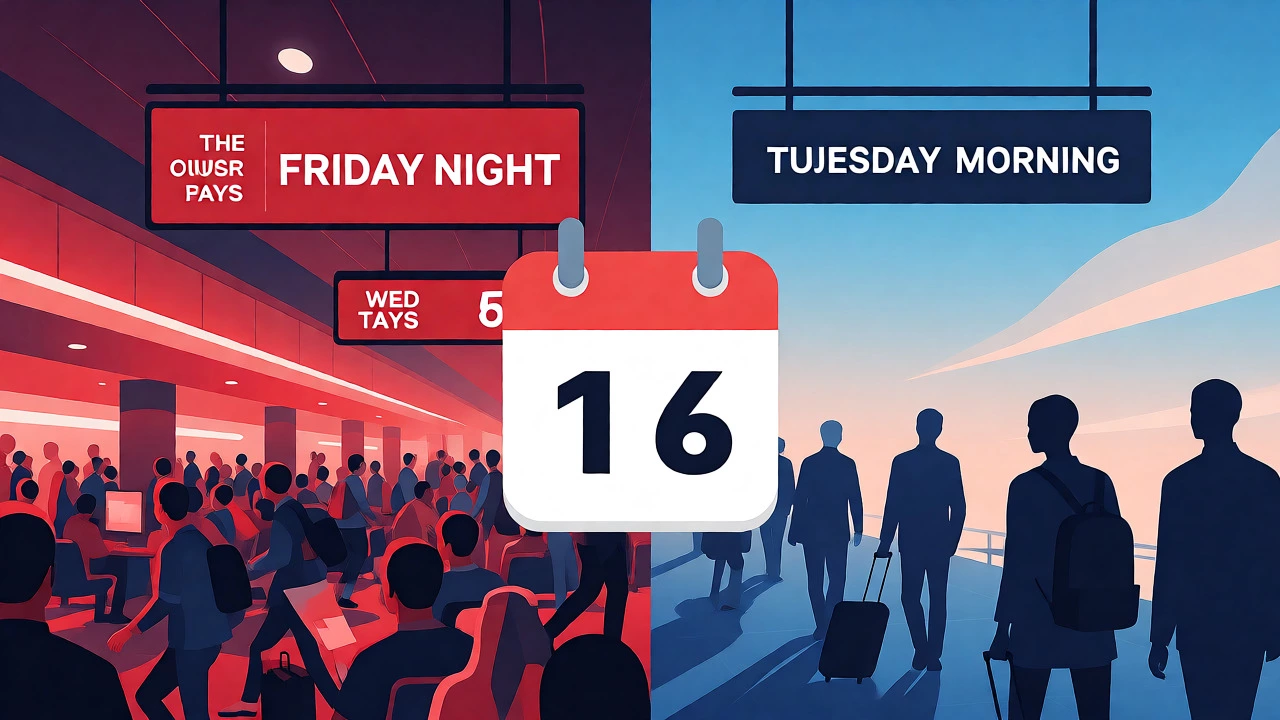
If you have flexibility in your schedule, shifting your departure date by even one or two days can save you hundreds of dollars. The general rule of thumb holds up across most domestic and international routes: avoid Fridays and Sundays.
Tuesdays and Wednesdays are statistically the cheapest days to fly. Why? Because these days fall outside the typical business travel window (Monday through Thursday mornings) and the weekend leisure rush (Friday evening to Sunday evening). Business travelers rarely want to spend their Tuesday night away from home unless absolutely necessary, and vacationers prefer to maximize their weekends.
Here’s a realistic breakdown of what you might expect on a standard transatlantic route from New York to London:
| Departure Day | Avg. Price Impact | Crowd Level | Best For |
|---|---|---|---|
| Tuesday | Lowest (-15% to -20%) | Low | Budget Travelers |
| Wednesday | Low (-10% to -15%) | Low-Medium | Short Trips |
| Saturday | Medium (0% to +5%) | Medium | Weekend Getaways |
| Thursday | High (+10% to +20%) | High | Business Travel |
| Friday | Very High (+20% to +30%) | Very High | Leisure Start |
| Sunday | Very High (+20% to +35%) | Very High | Return Home |
Notice the steep penalty for Sunday returns. Everyone wants to be home in time for work on Monday, so airlines capitalize on that urgency. If you can return on a Monday or Tuesday instead, you’ll often find a much softer landing for your bank account.
Domestic vs. International Nuances
While the mid-week rule applies broadly, international flights operate on slightly different rhythms due to time zones and visa requirements. For long-haul flights, especially those crossing multiple time zones, the "red-eye" factor plays a huge role in pricing.
Flights that depart late at night and arrive early in the morning are often cheaper because fewer people want to sacrifice sleep. However, don’t confuse cheap tickets with bad value. A $600 ticket that arrives at 6 AM after a sleepless night might cost you more in lost productivity or extra hotel nights than a $750 ticket that lands comfortably in the afternoon.
Furthermore, international hubs differ. Flying out of Vancouver, Canada, offers unique dynamics compared to New York or London. Flights to Asia often see price dips on Saturdays, whereas flights to Europe remain cheapest on Tuesdays. Always check local trends. In some regions, cultural holidays shift the "expensive" days. For example, during Chinese New Year, every day is expensive for flights to Asia, rendering the Tuesday rule useless.

How Far in Advance Should You Book?
Knowing the cheapest day to fly is half the battle. Knowing when to lock in that price is the other half. There is a "Goldilocks zone" for booking windows-too early, and you pay premium launch prices; too late, and you pay last-minute desperation rates.
According to data from major travel aggregators like Expedia and Skyscanner, the optimal booking window varies by trip type:
- Domestic Flights: Book 1 to 3 months in advance. Prices tend to stabilize about 21 days before departure.
- International Flights: Book 2 to 8 months in advance. For peak summer travel, aim for the earlier end of this spectrum.
- Last-Minute Deals: Rarely worth it for planned trips. These usually only exist for unpopular times (like 6 AM departures on a Friday) or empty seats on low-cost carriers.
Pro tip: Set price alerts. Since airlines use dynamic pricing, waiting for a dip is smarter than guessing. If you see a fare that matches your historical average for that route, book it. Trying to beat the bottom price by $20 often results in missing the deal entirely.
Leveraging Tools and Flexibility
You don’t need to be a data scientist to find these savings. Modern search engines have built-in features specifically designed to highlight the cheapest days. When using tools like Google Flights, look for the "Date Grid" or "Price Graph" view. This visualizes costs across an entire month, allowing you to spot anomalies instantly.
Consider using "Nearby Airport" searches too. Sometimes, flying into a secondary airport saves enough to cover a taxi ride to your final destination. For instance, flying into Oakland instead of San Francisco, or Stansted instead of Heathrow, can yield significant discounts, though you must calculate the total cost including ground transport.
Also, consider the power of the "split ticket." Occasionally, booking two separate one-way tickets on different airlines is cheaper than a round-trip ticket on a single carrier. This is particularly common with budget airlines like Ryanair or WestJet, which often price one-way legs aggressively to fill seats. Just be cautious: if your first flight is delayed and you miss the second, you’re on your own. Leave ample layover time if you choose this strategy.
Pitfalls That Kill Your Savings
Even if you pick the perfect Tuesday, certain mistakes can wipe out your savings. First, beware of "basic economy" traps. Many airlines now sell stripped-down fares that exclude checked bags, seat selection, and sometimes even overhead bin access. A $50 ticket saving might evaporate once you add a $30 bag fee and a $25 seat assignment.
Second, ignore incognito mode myths. While clearing cookies is good practice, there’s little evidence that airlines track individual users to raise prices dynamically in real-time. Don’t waste energy refreshing in private browsing mode; focus instead on comparing multiple devices or browsers to ensure cache isn’t showing stale data.
Finally, don’t overlook the impact of holidays. The "cheapest day" rule collapses during major travel peaks like Thanksgiving, Christmas, or Spring Break. During these periods, demand overrides all algorithms. If you must travel during a holiday, book as early as possible, even if it means paying a premium for a non-optimal weekday.
Final Thoughts on Smart Flying
There is no single magic button that guarantees the lowest fare every time. However, combining flexible dates with smart booking habits puts you ahead of 90% of travelers. By avoiding the Friday-Sunday rush, targeting mid-week departures, and understanding the booking window for your specific route, you can consistently secure better deals.
Remember, the goal isn’t always to pay the absolute lowest amount-it’s to get the best value for your time and comfort. Sometimes, paying $50 more for a direct flight versus a connection with a four-hour layover is the smarter financial decision when you factor in convenience and stress. Use the data, stay flexible, and let the airlines compete for your mid-week business.
Is it really cheaper to book flights on a Tuesday?
Not necessarily. While historically true, modern airline pricing algorithms adjust fares in real-time based on demand, not just the day of the week. You are more likely to find savings by flying on a Tuesday or Wednesday than by buying on a Tuesday. Focus on your departure date rather than your purchase date.
Which day of the week is the cheapest to fly internationally?
Tuesdays and Wednesdays are generally the cheapest days for international flights. Avoid departing on Fridays and returning on Sundays, as these are peak times for both business and leisure travelers, leading to higher demand and prices.
Does flying red-eye save money?
Yes, red-eye flights (overnight flights) are often cheaper because they are less desirable to many travelers who prefer sleeping in their own beds. However, weigh the savings against potential fatigue and the need for an extra hotel night upon arrival.
How far in advance should I book a cheap flight?
For domestic flights, aim to book 1 to 3 months in advance. For international trips, the sweet spot is typically 2 to 8 months out. Booking too early can mean paying premium introductory prices, while booking too late risks sold-out cheap seats.
Do incognito windows help find cheaper flights?
There is little evidence that airlines use cookies to increase prices for repeat visitors. Incognito mode prevents your browser from caching old prices, ensuring you see current data, but it doesn't hide you from the airline's tracking systems. Clearing cookies occasionally is fine, but don't rely on it as a primary savings tool.