
Why Do British People Say Holiday and Not Vacation?
 Jan, 18 2026
Ask a British person where they’re going for their holiday, and they’ll likely name a seaside town in Cornwall, a cottage in the Lake District, or maybe even a campsite in Wales. Ask an American the same question, and they’ll say vacation-usually to Florida, California, or somewhere with a pool. Same idea. Different word. Why?
The History Behind the Words
The word holiday has been in English since before the 10th century. It comes from "holy day," originally referring to religious days off work. Over time, it broadened to mean any time off from routine-especially for travel or rest. By the 1800s, as rail travel became common and factory workers got paid time off, "holiday" was firmly tied to leisure trips.
"Vacation" entered English from Latin through French in the 1500s, meaning "a leaving" or "release from obligation." It stuck around in American English after the American Revolution, while British English dropped it in favor of the older, more familiar "holiday." The U.S. kept "vacation" because it sounded more like a legal or formal break-something you applied for, not something you just took.
By the 1900s, the divide was clear: Brits took holidays. Americans took vacations. Neither was wrong. But the words carried different cultural weight.
How It Shapes British Travel Culture
In Britain, saying "holiday" isn’t just about language-it’s about mindset. A holiday implies a break from the daily grind, often with family, and frequently close to home. That’s why UK staycations exploded after 2020. When international travel got messy, Brits didn’t start calling their Cornwall trip a "vacation." They doubled down on "holiday."
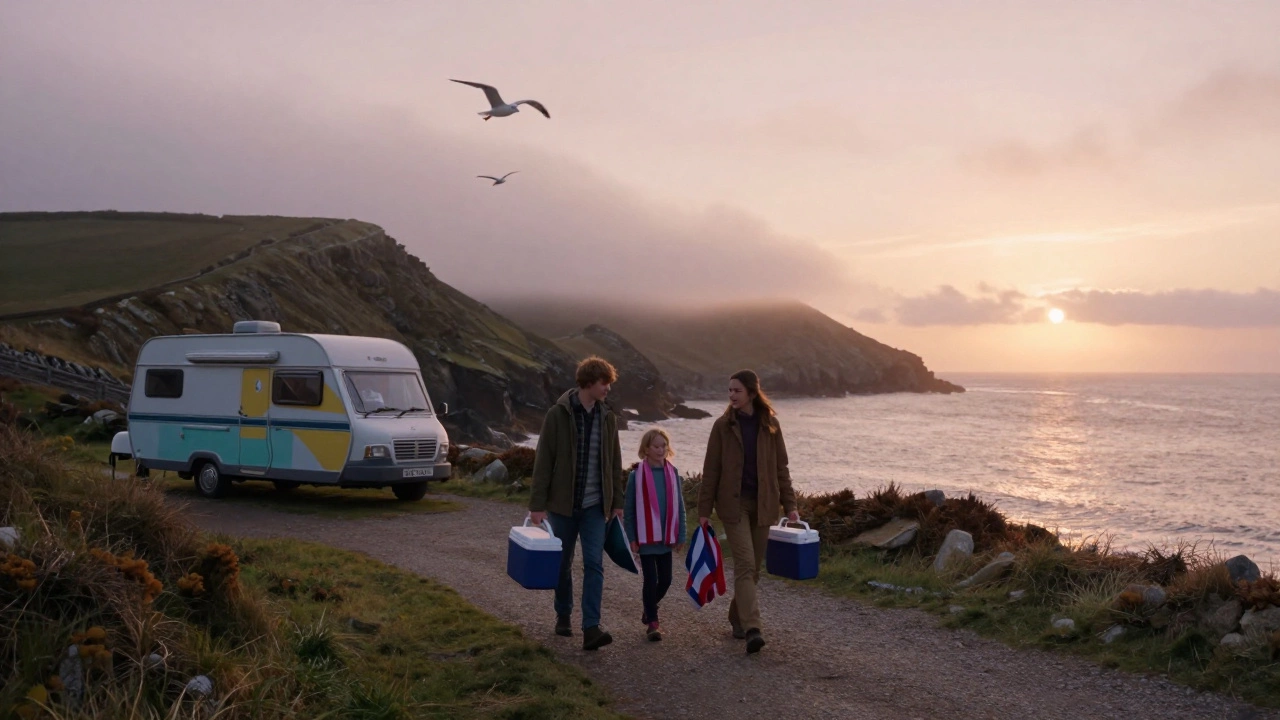
According to a 2023 survey by VisitBritain, over 60% of British adults took a staycation that year. Most stayed within 100 miles of home. Why? Because "holiday" doesn’t mean flying across the ocean. It means a change of scenery. A caravan by the sea. A pub with a view. A walk along the coast with the kids.
Even when they go abroad, Brits still say "holiday." A trip to Spain? "We’re off on holiday next week." A week in New York? "We’re having a holiday there." The word doesn’t change based on distance. It’s about the feeling, not the destination.
Why Americans Say Vacation
For Americans, "vacation" carries a different rhythm. It’s often planned months in advance, tied to paid time off from work, and sometimes seen as a reward. It’s also more likely to involve air travel, big resorts, or long drives across states. "Vacation" feels more like a scheduled event-something you earn.
There’s also a subtle class history here. In the early 20th century, "vacation" was used by wealthier Americans to describe trips to Europe or the Adirondacks. "Holiday" sounded too working-class, too tied to church days off. Over time, "vacation" became the default for all classes, while "holiday" faded out.
Today, Americans rarely say "holiday" unless they mean Christmas, Thanksgiving, or Independence Day. Those are official holidays. A trip to the beach? That’s a vacation.
What About Other English-Speaking Countries?
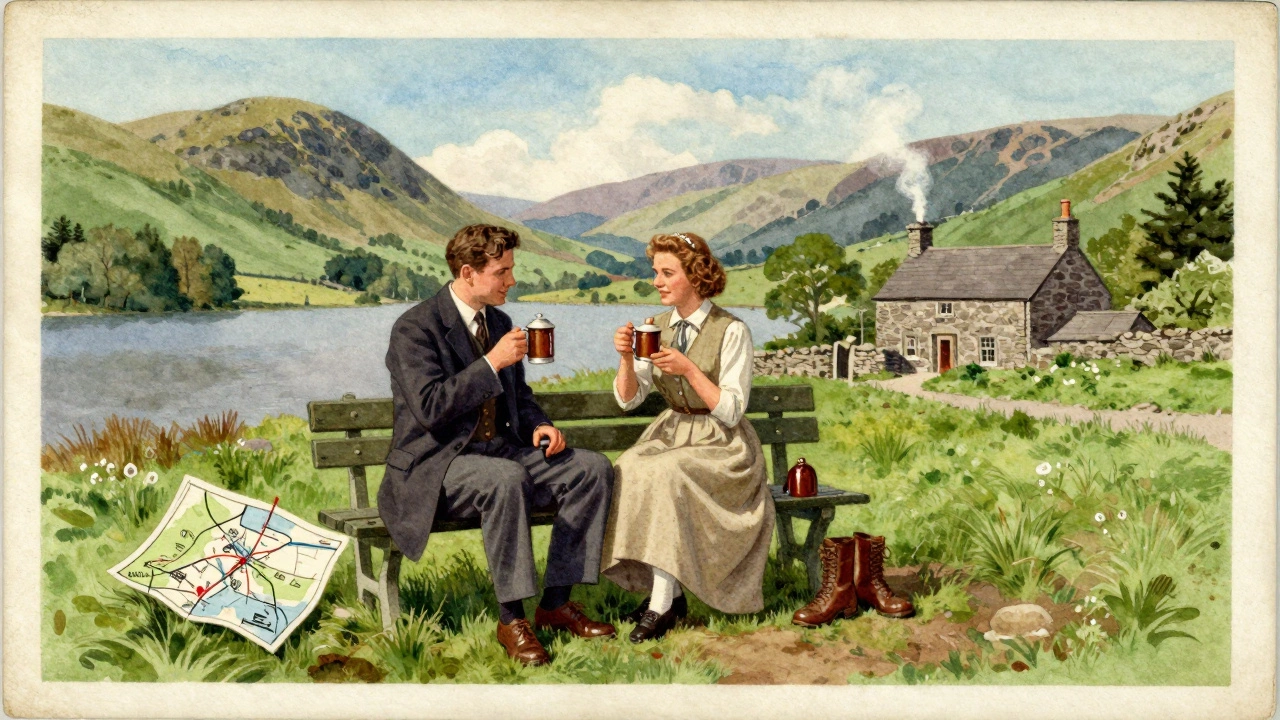
It’s not just Britain. Australians, New Zealanders, South Africans, and Irish people all say "holiday." They might fly to Bali or the Gold Coast, but they still say, "I’m going on holiday."
Canada is a mix. Most Canadians say "vacation," influenced by American media and proximity. But older Canadians, especially those with British roots, might still say "holiday." And if you ask someone in Toronto who grew up with grandparents from Manchester, you might hear, "We’re heading to Niagara for the holiday."
So it’s not about grammar. It’s about heritage.
The Staycation Boom and the Word That Held Strong
When the pandemic hit, the British didn’t suddenly start calling their local trips "vacations." They didn’t need to. "Holiday" already covered it-whether they were camping in the Scottish Highlands or renting a static caravan in Skegness.
That’s the real power of the word. It’s flexible. It doesn’t demand luxury. It doesn’t require a passport. A holiday can be five days in a rented cottage with no Wi-Fi and a kettle that takes 20 minutes to boil. And that’s okay.
That’s why UK staycations didn’t just survive after 2020-they thrived. Because "holiday" doesn’t come with expectations. It doesn’t need to be Instagram-worthy. It just needs to be different from Monday to Friday.
It’s Not About the Word-It’s About the Feeling
At its core, the difference between "holiday" and "vacation" isn’t linguistic. It’s emotional.
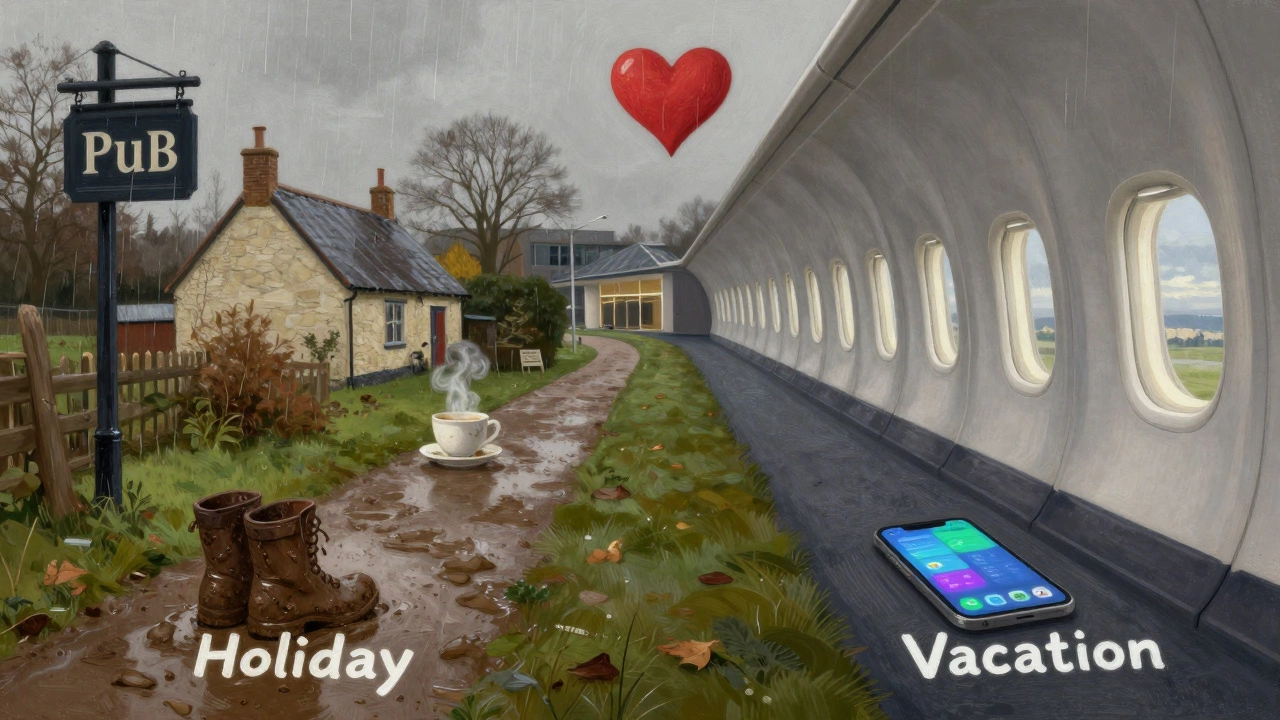
"Holiday" feels cozy. It’s about slow mornings, fish and chips by the sea, and the sound of rain on a tin roof. It’s the pub quiz on Wednesday night, the walk to the local shop for ice cream, the way your shoes get muddy and you don’t care.
"Vacation" feels planned. It’s about booking a resort, checking off sights, and snapping photos for the group chat. It’s about getting away-far away.
Neither is better. But if you’ve ever sat on a beach in Devon with a thermos of tea and watched the tide come in, you’ll understand why "holiday" still fits so well.
Why This Matters for Travelers
If you’re planning a trip to the UK and you’re American, don’t be surprised if locals say "holiday" when you say "vacation." It’s not a mistake. It’s just how they talk. And if you’re a Brit planning a staycation, don’t feel pressured to call it something else. "Holiday" isn’t outdated-it’s authentic.
Even now, in 2026, with AI travel planners and global booking apps, the British still say "holiday." And they still take them-right here at home.
Why do British people say holiday instead of vacation?
British people say "holiday" because it’s been the standard word for a break from work or school since the 1800s. It evolved from "holy day," and stuck around even as "vacation" faded from common use in the UK. The word carries cultural weight-it’s tied to family time, local getaways, and the idea of rest, not just travel.
Is "vacation" understood in the UK?
Yes, most Brits understand what "vacation" means, especially younger people who consume American TV and movies. But they’ll still say "holiday." Using "vacation" in the UK sounds foreign, like saying "elevator" instead of "lift." It’s not wrong-it just doesn’t sound natural.
Do British people ever go on vacation abroad?
They do, but they still call it a holiday. A trip to Greece, Thailand, or Canada is still a "holiday." The word doesn’t change based on location-it’s about the break, not the destination. Even when they fly halfway across the world, they say, "We’re going on holiday to Mexico."
Why are UK staycations so popular?
UK staycations are popular because "holiday" doesn’t require a passport, expensive flights, or long planning. It’s about changing your environment without leaving the country. After the pandemic, many Brits discovered they didn’t need to fly to Spain to feel relaxed. A week in a cottage with a wood burner and a view of hills is just as much a holiday.
Does the word "holiday" affect how Brits travel?
Absolutely. Because "holiday" is tied to simplicity and local experiences, Brits often choose affordable, cozy, and familiar spots-caravans, B&Bs, national parks, or coastal towns. They’re less likely to book luxury resorts unless it’s a special occasion. The word shapes expectations: a holiday is about comfort, not extravagance.