
Why Do People Like Guided Tours? The Real Reasons Behind Their Popularity
 Jan, 11 2026
Guided Tour Value Calculator
This calculator helps you determine if a guided tour is worth the investment based on your travel style, budget, and preferences. Based on insights from the article "Why Do People Like Guided Tours?".
Your Preferences
Tour Features
Results
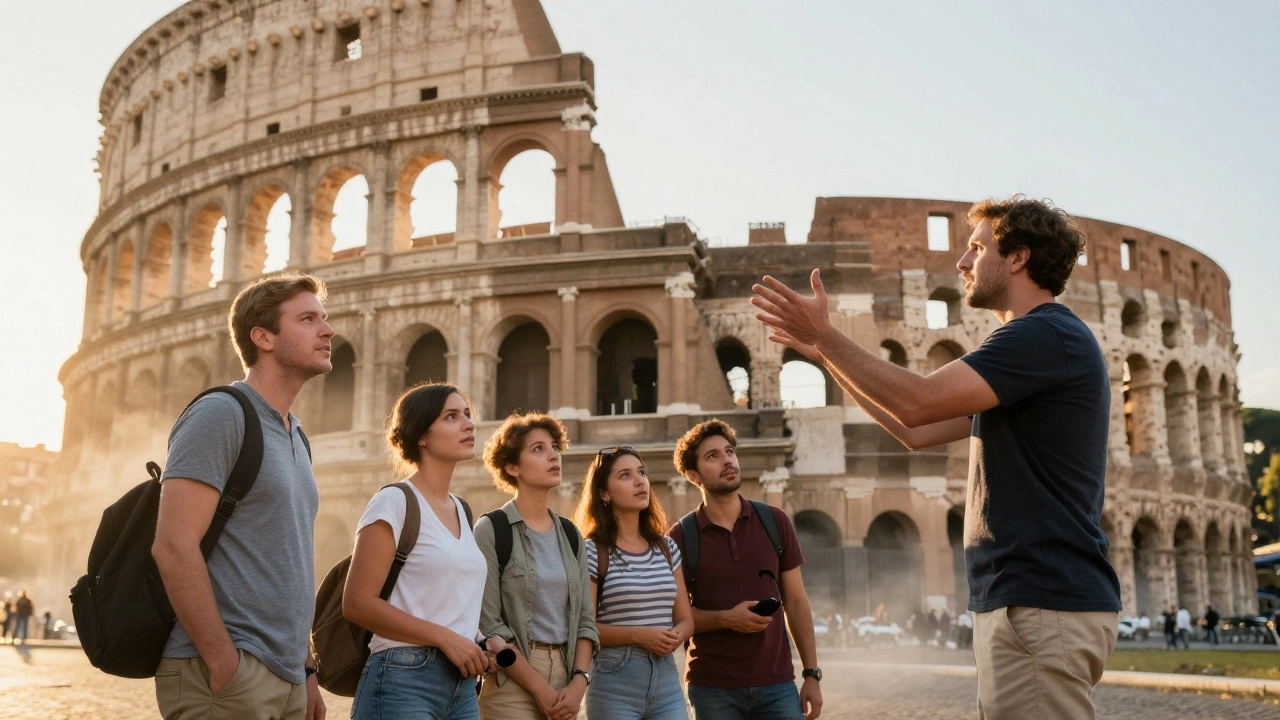
Have you ever stood in front of the Colosseum in Rome, listening to a guide tell you how gladiators trained, what the crowd screamed, and why the emperor’s box had a secret escape hatch? Or walked through Kyoto’s Fushimi Inari shrine, watching thousands of red torii gates fade into mist while your guide explains the meaning behind each offering? That moment-when history, culture, and storytelling click into place-is why people keep choosing guided tours, even in an age of smartphones and self-guided apps.
You don’t have to be the expert
Most people don’t spend years studying Roman architecture, Japanese tea ceremonies, or Aboriginal Dreamtime stories. But they still want to understand them. Guided tours take the pressure off. You don’t need to Google every statue, decode every sign, or guess what the plaque means. A good guide gives you the context you didn’t know you were missing. In Paris, you might walk past Notre-Dame every day and never realize the cathedral’s north transept was rebuilt after a 12th-century fire. A guide tells you that. And suddenly, the building isn’t just stone and stained glass-it’s a story.Access you can’t get on your own
Some places just aren’t open to solo travelers. In Venice, you can’t walk into the Doge’s Palace without a ticket. But even with a ticket, you won’t get into the secret passages beneath the council chambers unless you’re on a guided tour. In Kyoto, the private gardens of ancient temples only open to groups with reservations. In Petra, Jordan, the Treasury isn’t just a façade-it’s a whole city carved into rock. Without a guide pointing out the water channels, burial chambers, and ancient graffiti, you’d miss half of it. Guided tours unlock places, stories, and permissions you didn’t even know existed.The human connection makes it stick
People remember stories better than facts. A guide doesn’t just say, “This temple was built in 1182.” They say, “This temple was built by a king who lost his son in battle. He wanted to honor him, so he carved every detail with his own hands-until his fingers bled.” That’s the kind of thing you remember. And you remember it because the person telling it made eye contact, paused for effect, and smiled when you gasped. That connection turns a sightseeing stop into a memory. A 2023 study by the Travel Psychology Institute found that travelers who took guided tours were 68% more likely to recall specific details about a destination than those who explored alone. The reason? Human storytelling triggers emotional memory better than text or audio files.
You don’t have to plan anything
Planning a trip is exhausting. Figuring out transport, timing, entry fees, language barriers, local customs-each one adds stress. Guided tours remove that weight. You show up. You follow the group. You get a map, a headset, and a bottle of water. The guide handles the rest. In cities like Tokyo or Istanbul, where public transit is efficient but confusing, a guided tour means you don’t need to navigate 12 train lines with a broken Google Maps signal. You just walk. And when you’re tired, the guide knows where to sit, where to buy the best matcha croissant, and when to skip the line. It’s not luxury-it’s peace of mind.Group energy makes the experience better
Traveling alone can be lonely. Traveling with strangers can be awkward. But in a guided tour, something shifts. You’re all there for the same reason: to learn, to see, to feel something. You share a moment when the guide tells a funny story and everyone laughs. You snap the same photo of the sunset over Santorini. You ask, “Wait, what did he just say about the mosaics?” and someone else says, “I didn’t catch that either.” That shared curiosity builds connection. It’s why people come back from guided tours and say, “I made friends on this trip.” Not just acquaintances-friends. A 2024 survey by TourRadar found that 41% of first-time guided tour travelers ended up staying in touch with at least one person from their group after returning home.Local voices, not just brochures
Google tells you what a place is. A local guide tells you what it’s like to live there. In Oaxaca, Mexico, a guide might take you to a family-run mole kitchen and say, “This recipe has been passed down for five generations. My grandmother used to say if the chocolate burns, the spirits get angry.” That’s not in any travel guide. That’s real. In Barcelona, a guide might show you a hidden courtyard where neighbors still gather to play chess and gossip in Catalan-something tourists never see. Guided tours give you access to the unfiltered, unedited version of a place. The version locals live.
It’s safer, especially when you’re new
If you’ve never been to Cairo, you don’t know which tuk-tuk drivers are honest. If you’ve never been to Bangkok, you don’t know which street food stalls have clean water. Guided tours reduce risk. You’re not wandering alone at night. You’re not handing cash to someone who doesn’t speak your language. You’re with a trained professional who knows the safe routes, the scams, the right tipping customs. In countries with language barriers, that’s not a luxury-it’s a necessity. And for older travelers, solo travelers, or families with young kids, that safety net makes all the difference.You get more than you paid for
A guided tour isn’t just a walk with a person holding a flag. It’s often a package. You get entry fees included. You get skip-the-line access. You get snacks, water, transportation between sites. In Rome, a $45 guided tour of the Vatican might include a private viewing of the Sistine Chapel before crowds arrive. In Kyoto, a $60 tea ceremony tour might include a handmade ceramic cup you get to take home. You’re not paying for a guide-you’re paying for access, time, and expertise bundled together. And that’s often cheaper than buying each piece separately.It’s not about being told what to do-it’s about being shown what matters
Some people think guided tours are for people who can’t think for themselves. That’s not true. It’s the opposite. People who choose guided tours are choosing to invest their time wisely. They know they only have a week in Italy. They don’t want to waste it reading plaques that say “Roman ruins, 1st century BCE.” They want to know why those ruins still matter. They want to feel the weight of history, not just see it. A good guide doesn’t just tell you what happened. They help you understand why it still echoes today.Guided tours aren’t outdated. They’re evolving. More guides now specialize in niche interests: street art in Berlin, sustainable fishing in Iceland, indigenous storytelling in Canada. You can find a tour on almost anything-fermented foods in Korea, quantum physics in CERN, beekeeping in Slovenia. The point isn’t that you need someone to lead you. It’s that you want someone who knows the hidden layers, the quiet moments, the real stories. And that’s worth paying for.
Are guided tours worth the cost?
Yes, if you value time, context, and access. Many guided tours include entry fees, transportation, and snacks that would cost more if bought separately. A $50 tour that gets you into a museum, skips the line, and gives you a 2-hour deep dive with a historian is often cheaper-and far more meaningful-than paying $30 for entry and spending an hour reading signs you don’t understand.
Can you do guided tours on your own?
You can rent audio guides or download apps, but they’re not the same. Audio guides don’t answer questions. They don’t adjust to your pace or mood. They don’t notice you’re tired and suggest a coffee break. They don’t share personal stories or point out a hidden detail you’d miss. A live guide brings adaptability and humanity that no app can replicate.
Do guided tours feel too touristy?
Some do-especially the big bus tours that rush through 10 sites in 3 hours. But many modern guided tours are small-group, niche, and local-run. Look for operators with 5-8 people max, local guides, and reviews that mention “hidden spots” or “real stories.” These aren’t tourist traps-they’re doorways into authentic culture.
Are guided tours good for families?
They can be. Many tour companies offer family-friendly options with interactive elements-treasure hunts in castles, storytelling sessions for kids, hands-on workshops. In London, some tours let children touch replica Roman coins. In Barcelona, guides teach kids to draw Gaudí’s mosaics. These experiences turn sightseeing into play, and play into learning.
What if I don’t like crowds?
Book a private tour or a small-group experience. Many guides now offer 1-4 person tours with flexible timing. You can start early, avoid peak hours, and move at your own pace. Some even offer “dawn tours” of popular sites when no one else is there. You get the guide’s knowledge without the crowd.